
Horse Racing Terms Explained: A Beginner’s Guide
If you are new to horse racing, the language around the sport can feel like another world. Commentators talk about graded races, dark horses and handicap ratings. Racecards list a horse’s mother, weight and official mark. Stewards announce non-runners and tongue ties. For new Deva Racing owners and anyone considering a syndicate, understanding these horse racing terms is the quickest way to feel part of the action.
This beginner’s guide explains the key terms you will see around flat racing and National Hunt racing, from race types to equipment, ages and betting language. The aim is simple. When your horse runs, you know exactly what is going on and why it matters.
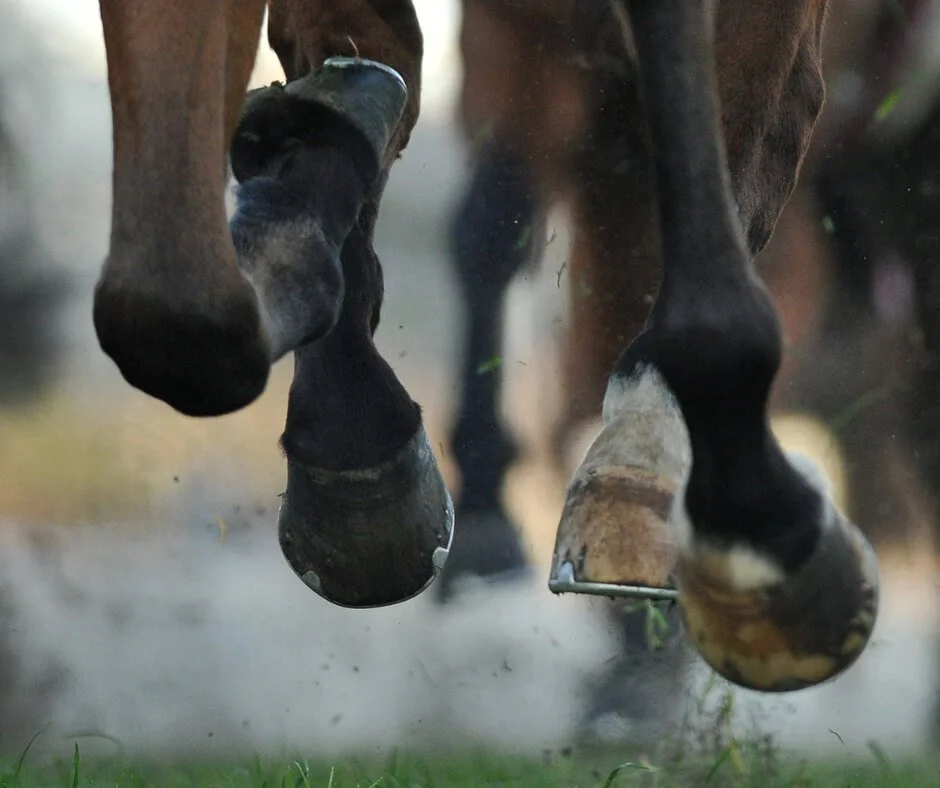
Flat racing and National Hunt racing
In Britain, there are two main codes for horse racing. Flat racing and jump racing, also known as National Hunt racing.
Flat racing is run over an artificial racing surface or turf with no obstacles. It focuses on speed and acceleration. The shortest race distance on the Flat is around five furlongs, with sprinters showing blistering pace, and it stretches up to staying trips of two miles and beyond. Classic flat races such as the Derby, the 2000 Guineas and the St Leger sit at the top of this code, joined by the major Group races and Royal Ascot, where prize money and prestige are at their highest. These are the races that often reveal potential breeding talent for the future.
National Hunt racing is jump racing. Horses compete over hurdles or steeplechase fences, usually at longer distances, and stamina and jumping ability are at a premium. Within this code, you will see hurdle races, steeplechase races and National Hunt Flat races, often called “bumpers”. A National Hunt flat race is run without obstacles, but it is not part of the flat racing programme. It is designed for young prospective jumps horses to gain racecourse experience before they go over obstacles.
The biggest races in the National Hunt calendar are the Grand National and the Cheltenham Gold Cup, along with other big National Hunt races and major championship races at the Cheltenham Festival and elsewhere. These historic major races define careers and often become part of racing folklore.
Race types, classes and handicap races
Once you know the codes, the next step is understanding how race types are structured.
Maiden races are for horses that have never won a race. In flat racing, maiden races are where many two-year-old horses and three-year-olds begin their careers. In National Hunt racing, maiden or novice hurdle and chase races are equivalent starting points for such horses learning their trade over obstacles.
Group races and listed races sit towards the top of the flat programme, while graded races fill the same role over jumps. These group and graded races, along with classic flat races and other historic races, are where the very best horses run off level weights.
Handicap races are different. In a handicap, each horse carries a different weight based on its official handicap rating. The idea is to put horses of varying ability on what the British Horseracing Authority calls a fair and equal basis. A better horse carries more weight, and a lesser one carries less, so that in theory they all meet at the finish.
Official handicap ratings are determined by BHA handicappers who study a horse’s race record and previous races. The rating is a number, for example, 130 over hurdles or 85 on the flat, that tells you how the horse is viewed compared with others. The higher the rating, the better the horse is judged to be. All the horses in a handicap are set a weight that reflects those ratings. When a horse wins and improves, its rating can rise; if it struggles, the rating may drop over time.
You will also see references to a middle-distance horse. This simply means a horse whose optimum trip is somewhere in the middle of the range. On the Flat, that usually means races around a mile to a mile and a half. In National Hunt racing it might be a horse best at two and a half miles rather than at the shortest or longest trips.
Age, sex and breeding terms
Age and sex are central to how races are framed, so the terms come up often.
In Britain, every horse is treated as having its birthday on 1 January, regardless of the actual date the horse was born. That means a two-year-old horse born in May and a two-year-old born in February are the same age on paper, even if one is younger in real life.
Most male horses that race are colts or geldings. A colt is an ungelded male up to four. Once gelded, a male horse is no longer used for breeding, so he is often described simply as a gelding. A male breeding horse kept for covering mares is called a stallion.
A female horse is a filly up to four, then a mare once she is a female horse aged five or older. The race conditions may say “female horse aged three or above”, which means the race is restricted to fillies and mares of that age range.
The horse’s mother is called the ‘dam. The sire is the father. When you see a racecard, those breeding lines are listed because they give you clues about stamina, ground preference and potential breeding talent if the horse goes on to stud or broodmare duties.
Syndicates such as Deva Racing pay close attention to these details when choosing young horses, especially for longer-term National Hunt campaigns.
How races are run and described
During and after a race, certain phrases are used to describe how the race developed and how the horses finished.
If a commentator says a horse is “running comfortably” or “travelling strongly”, it means the horse looks in control and relaxed, often on the bridle, without having been asked for maximum effort. When the jockey asks for more, and the horse responds, you may hear “the horse wins easily” or “wins by daylight”, signalling a clear success.
Race distances at the line are full of specific terms. When two or more horses finish together and cannot be split, it is a dead heat. When there is a margin, it can be a short head, a head, a neck, a length and more. A win by a head means the horse’s head is just in front at the race finish. A win by a neck means the horse’s neck margin separates first and second.
Sometimes, unfortunately, a horse collides with another, makes an error at a fence, or falls. If a horse fails to complete the race for any reason, the form line will show it pulled up, fell or unseated its rider. A non-runner is a horse that was declared for the race but did not take part, often due to a ground change or a small setback.
A dark horse is an animal whose true ability is not yet fully known, perhaps because its previous races were in lesser company or over the wrong trip. When a dark horse suddenly improves, it can be a shock to the market but often not to connections who have seen the work at home.
At the end, the horse returns to the winner’s enclosure, where connections, including owners, trainers and jockeys, receive their prize and photographs. For a syndicate, that walk back is the moment the whole season’s planning feels worthwhile.
Equipment, headgear and what it all means
You will often read that a horse is wearing blinkers, cheekpieces or a tongue tie for the first time. These are pieces of equipment designed to help the horse concentrate or breathe.
Blinkers are cups placed beside the horse’s eyes that limit its rear vision. The aim is to help nervous or easily distracted horses focus on what is in front of them rather than on other runners or the crowd. Cheekpieces are softer strips of sheepskin or similar material attached to the cheek straps of the bridle. They narrow the horse’s field of view slightly, but less than blinkers. Horses wearing cheekpieces often show a little more focus without losing too much awareness of their surroundings.
A tongue tie is a piece of material or band that holds the horse’s tongue down and prevents it from slipping back and obstructing the airway. The horse’s tongue is passed under the tie so that it does not interfere with the horse’s mouth action. It is used where the trainer and vet believe it will help the horse breathe more efficiently and stop it from making a gurgling noise or choking in the closing stages.
In some cases, a horse wearing blinkers or other headgear can show marked improvement, though the horse’s trainer risks overdoing it if the animal becomes too revved up. Deva Racing and other professional operations take care to use such equipment only when it serves a clear purpose in the horse’s campaign.
You will sometimes read that a horse is wearing a hood, visor or other variations. All of these affect the horse’s vision and sound environment to a degree, and their use is declared in advance so that all the horses compete on transparent terms.
Starting positions, direction and weight carried
On the Flat, much is made of a horse’s starting position, known as the draw. At some tracks, particularly around tight bends, being drawn on the inside or outside can affect how the race unfolds. On straight courses, the effect is usually about which part of the track is quicker on the day.
In Britain, most horses run anticlockwise, in other words, on left-handed tracks, though there are also right-handed courses. National Hunt tracks and flat courses vary in style, which is why some horses clearly prefer one track to another.
The weight a horse carries in a race is the sum of the jockey’s weight, the saddle and any extra lead. This is set by the race conditions. In level-weight races, all runners carry the same weight. sometimes with small allowances for age or sex. In handicap races, the horse’s weight reflects its rating. When you read that a horse carries top weight, it means it is the highest rated in the field. When a young jockey rides and claims a few pounds, that allowance is deducted and shown in the racecard.
Modern racing also uses all-weather tracks, which are artificial racing surfaces designed to provide consistent going conditions throughout the year. These sit alongside traditional turf courses and are especially common in winter flat programmes.
Big races, campaigns and betting language
When people talk about major races, they may be referring to historic major races like the Derby, the Guineas, the Grand National, the Cheltenham Gold Cup or Royal Ascot’s flagship events. These are Group or graded races with very high prize money and a place in the sport’s story.
Trainers plan a horse’s campaign carefully around such targets. A flat horse with speed might be aimed at group races over sprint or mile distances. A staying chaser might be campaigned through handicaps and graded races to reach the big national hunt races in the spring. Understanding that plan helps syndicate members appreciate why a horse runs where it does and why it sometimes skips a race that looks tempting on paper.
Betting terms appear alongside racing language, although Deva Racing’s focus is ownership and the racing experience, not gambling. When winning bets are struck on a race, the on-course bookmakers and online operators are regulated under the Gambling Act and associated guidance, and government policy in this area is evolving. For example, recent UK budget changes increased taxes on some forms of remote gambling but confirmed that the duty on horse racing bets would remain at existing levels, reflecting the sport’s economic and cultural importance. For new racegoers, the key point is that betting is optional. Following your horse’s progress, understanding its handicap rating and race conditions, and enjoying the day at the races is rewarding in its own right.
Final thoughts
Horse racing terms can seem daunting at first, but once you know the basics, the whole sport opens up. You will understand why a National Hunt flat race matters for a young jumper, what a handicap rating is telling you, and why a horse wearing blinkers or a tongue tie might be a different proposition next time.
For Deva Racing owners and anyone considering a syndicate, this knowledge deepens the experience. When your horse lines up in a maiden, earns a mark, climbs through handicap races or earns a place in group or graded company, you will understand each step of the journey.
If you would like help choosing the right syndicate or simply want to learn more about how horses are campaigned, the Deva Racing team is always happy to talk through the detail.
